19/01/2013
The symbolic art of guns
Whether we like it or not, guns are in fashion. Earlier this month, Ecoterre reported that there was a growing demand for children’s bullet-proof jackets and backpacks in America.The tragedy of gun culture is also being brought to public attention through the work of contemporary artists, like Kristian von Hornsleth’s Langeland School Massacre Project.
And at this month’s London Art Fair, guns were the subject matter of recent works by the following:
Read More
Thank you for your comment, it will be reviewd and published shortly.
02/04/2012
Hackneyed? The art of ideas: is conceptual art a con?
In his recent book, Con Art (Why You Ought to Sell Your Damien Hirst While You Can), art critic and former curator Julian Spalding predicts that the conceptual work of artists like Hirst will soon become worthless. But “is conceptual art a con?” asked Channel 4 News, ahead of its preview of the forthcoming Damien Hirst ‘retrospective’ at The Tate Modern.
Read More
Thank you for your comment, it will be reviewd and published shortly.
18/12/2011
Salvage society: reclaimed metal and found materials upcycled into artworks
Artists are increasingly ditching traditional materials, such as canvas, in favour of more novel surfaces upon which to express their creativity. Sculptors are also becoming more imaginative in their choice of materials, upcycling found objects and recycling waste products:
Read More
Thank you for your comment, it will be reviewd and published shortly.
13/12/2011
Broken society: victim culture in the arts

Is the faltering note at the end of Leona Lewis’s new single, Hurt, sung on purpose? It's an interesting choice of song - and her version seems to pander to the victim culture (see video clip and lyrics below). The appeal of not being perfect, but being human, is the latest curious trend. In contrast to the golden days of Hollywood, modern celebrity status is largely based upon ritual public humiliation. Good deeds, acts of heroism and success are not newsworthy, but defects and disaster are...
Read More
Thank you for your comment, it will be reviewd and published shortly.
09/12/2011
Tony Heywood's conceptual horticulture

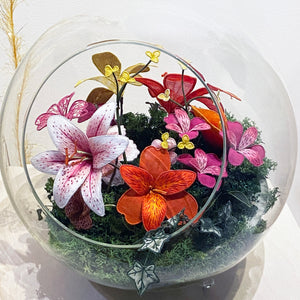
Tony Heywood has been described as the “Damien Hirst of horticulture.” Heywood was formerly head gardener for the Church Commissioners, which owns Hyde Park Estates. The flowering skull curiosity, pictured above, called The Head Gardener, was for shown earlier this year by the Fine Art Society. Heywood’s latest creation, Glamourland, made in collaboration with Alison Condie, is currently on display in Berkeley Square (until 20th January).
Read More
Thank you for your comment, it will be reviewd and published shortly.
16/11/2011
Contemporary curiosity boxes by Japanese artists and designers
Shoreditch based gallery, ICN’s recent opening exhibition ‘OHAKO’ paid homage to the Japanese word meaning ‘one's best technique and skill’. Using traditional Japanese tea boxes from Shizuoka, Japan – also known as ‘ohako’ - each artist involved in the project created an expression of their best skill inside a tea box - their ‘ohako’ enclosed in an ‘ohako’.
The exhibition featured works by 30 Japanese artists representing manga art, photography, architecture, ceramics, fashion, character design, art and more – including internationally known artists, as well as relative newcomers. The aim of the exhibition was to give visitors to the London gallery a rare opportunity to experience “the unique harmony of Japanese arts, using a combination of tradition and contemporary expression.” Here is a selection of some the uniquely curious exhibits on show:
Read More
Thank you for your comment, it will be reviewd and published shortly.
22/10/2011
Crafty collages, dioramas and decoupage

There were plenty of works featuring
decoupage, along with handcrafted
dioramas in evidence at this year’s
Affordable Art Fair. Using materials ranging from fabric and vintage magazine cuttings to used plastic bottles and even an old television set, artists are crafting unique and unusual collages to express a retro-progressive vibe.
Read More
Thank you for your comment, it will be reviewd and published shortly.
22/10/2011
Graffiti art in London

Has graffiti art become mainstream? Dedicated art events like the Moniker Art Fair and galleries such as London’s Pure Evil would have us think so. Previously known for their notoriety, graffiti artists are basking in
their new found status and ever growing popularity with the art establishment. Here are some photographs of recent exhibits - and examples of spray painters in action in East London, reclaiming run down exteriors and adding colour (and toxic vapour) to the streets.
Read More
Thank you for your comment, it will be reviewd and published shortly.
10/10/2011
Weaving and tapestry: the woven thread in art and design

According to the
New York Times, this year’s Venice Biennale highlighted “the return of the loom.” From being amongst the “most princely of arts” during the Middle Ages and early Renaissance,
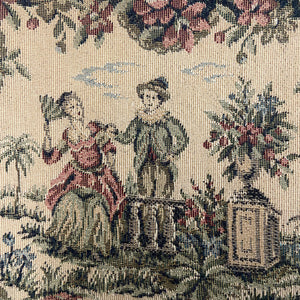
tapestry, embroidery and carpet weaving were sidelined, as painting and sculpture became more esteemed. However, in recent years, contemporary artists have been rediscovering the artisan craft of weaving:
Read More
Thank you for your comment, it will be reviewd and published shortly.
29/08/2011
Chav culture in art and design
Beer swilling youths, pit bull terriers, crackheads and WAGs appear alongside symbols of traditional working class life in a new wave of chav art and design. In the wake of London’s recent riots, expect to see a lot more where this curious trend came from...
Read More
Thank you for your comment, it will be reviewd and published shortly.
23/08/2011
The all-seeing, all-knowing eye

In our surveillance society, where closed-circuit television is never too far away, it’s hardly surprising that Big Brother’s ever watchful eye should become a recurring theme in art and design. However, eyes are also considered to be ‘windows to the soul.’ In the context of the computer age, where communication is increasingly via the internet, eyes have become something of a curiosity: a symbol of sincerity, truth, wisdom, empathy and understanding in an era of virtual reality…
Read More
Thank you for your comment, it will be reviewd and published shortly.
06/05/2011
Musical instruments: icons of modern design art

In the age of digital music, traditional and vintage musical instruments are increasingly viewed as something of a curiosity. Handmade by artisans working in small, independent workshops, musical instruments are the epitome of slow style. Their unique design and distinctive style has inspired artists throughout the centuries, but now musical instruments are being conferred the status of pieces of design art in their own right.
Read More
Thank you for your comment, it will be reviewd and published shortly.
16/04/2011
Arty bananas in fashion
Everyone’s going bananas. Design artists and fashion designers seem equally smitten with the curiously coloured fruit:
Read More
Thank you for your comment, it will be reviewd and published shortly.
26/03/2011
Dirty icons as symbols of hope in design art

In an exercise inspired by the vast dust heaps that dominated the skylines at the top of Gray’s Inn Road, as immortalized in Dickens’ Our Mutual Friend, a growing stack of dust-made bricks will be exhibited as part of the
Dirt exhibition at Wellcome Collection. A series of events will also celebrate and and ritualize the bricks, and the project will culminate in their burial, returning them to the earth:
Read More
Thank you for your comment, it will be reviewd and published shortly.
19/03/2011
Religious icons and decorative design art

The popularity of religious traditions and the way religious icons are presented has changed dramatically in recent decades. For centuries, diverse cultures around the world expressed their beliefs through paintings and sculpture that has remained true to long established conventions of style. Now art that hitherto seemed blasphemous is heralded as enlightened, thought provoking and full of symbolic meaning. Traditional religious icons are being re-worked into contemporary decorative pieces and modern art increasingly incorporates sacred symbols, moral and spiritual messages from the past.
Read More
Thank you for your comment, it will be reviewd and published shortly.
19/02/2011
Freak shows, anatomy and body parts in art and design

Why are curious people and freaks of nature suddenly in vogue? Old fashioned
freak show memorabilia, dismembered body parts and anatomical models of diseased bodies are now popular in art and design. Here are some examples and possible reasons for this curious trend:
Read More
Thank you for your comment, it will be reviewd and published shortly.
14/02/2011
Filth in fashion as design art gets dirty

Leading artists and designers have been creating things from junk, old cast offs, their own and other people’s rubbish for quite a while. However, the curious trend of upcycling discarded waste products and materials into new clothing, accessories, furniture and decorative art has only taken off relatively recently. A forthcoming exhibition at the Wellcome Collection,
Dirt: The Filthy Reality of Everyday Life (24th March – 31st August 2011) should draw even more attention to the rubbish that surrounds us. In advance of the exhibition, here are some of the key elements of this trend:
Read More
Thank you for your comment, it will be reviewd and published shortly.
09/12/2010
Marine life in design art
The sea has been a source of inspiration for artists and designer makers since time immemorial. Randomly selected examples from relatively recent decades include Salvador Dali’s surreal images and interpretations of the sea, the surreal underwater films of Jean Painleve, Hubert de Givenchy’s 1953 spring/summer fashion show themes of the sea and shells and Bill Woodrow’s 1981 design for an electric fire with fish. And now, with everything from piscine ceramics to piscatorial inspired knitting projects, it seems that all things aquatic are very much in fashion.
Read More
Thank you for your comment, it will be reviewd and published shortly.
08/11/2010
Storytellers, curators and the art of ideas

“Stories invest objects with meaning, giving them voices, histories and personalities. Moreover, if we choose to tell our personal stories through objects, they gain our own meanings alongside those of the designer… the objects …refer to the great universal narratives of life, death and renewal that are woven into our cultural memory, familiar from myth and fairy tale, religion, and even our own hidden desires”, says Gareth Williams.
Read More
Thank you for your comment, it will be reviewd and published shortly.
31/10/2010
Pathology and morbid curiosities

The fascination with pathological and morbid medical curiosities in art and design circles seems to be growing. Morbid anatomy museums have become popular places of inspiration and vintage anatomical models have even been seen at interiors trade fairs this year.
Back in July 2007,
Miles Goslett first reported in the Telegraph that, “A Colour Atlas of Forensic Pathology, by G Austin Gresham, was the Britart bible, according to Mat Collishaw, the young British artist who came to prominence at the Sensation exhibition at the Royal Academy in 1997.” The definitive guide to the science of pathology “was so heavily mined by leading artists in the movement that an octogenarian Cambridge professor can rightly be credited as the unintentional grandfather of Britart.”
Read More
Thank you for your comment, it will be reviewd and published shortly.
15/06/2010
Vanitas - the art of death

The word ‘vanitas’ is Latin for vanity, or ‘emptiness’, and signifies the meaningless of earthly life. According to Wikipedia “vanitas is a type of symbolic work of art especially associated with Northern European still life painting in Flanders and the Netherlands, dating from the 16th and 17th centuries,” and paintings executed in the vanitas style “are meant as a reminder of the transience of life, the futility of pleasure and the certainty of death.”
Following devastating outbreaks of the
Black Death in Europe, art became increasingly and almost obsessively focused upon death and decay, before its gradual transition into the still life genre. Vanitas themes originate from medieval funerary art and include symbols
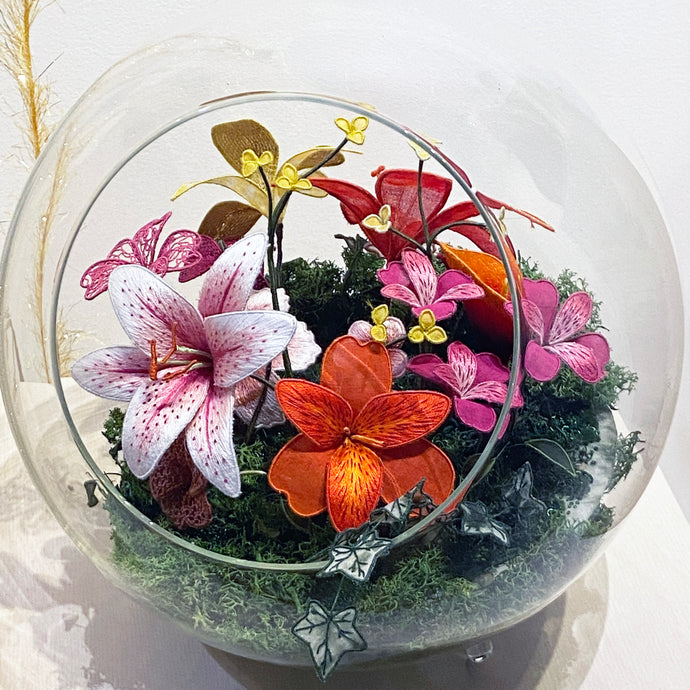
such as skulls, fruit, flowers and butterflies to represent death,
together with the brevity and ephemeral nature of life. The sensuous
depiction of the subject matter is often in conflict with the
moralistic stance taken by the work of art.
Read More
Thank you for your comment, it will be reviewd and published shortly.