16/11/2012
Death – a Self-Portrait: The Richard Harris Collection at Wellcome
Richard Harris, a softly spoken 75 year old self-confessed optimist from Chicago, has a curious hobby – collecting all things relating to death. His collection of art, memorabilia and ephemera extends to around 2000 artworks, scientific specimens and historical artefacts, some 300 of which are featured in a new exhibition at the Wellcome Collection: Death – A Self-portrait.
Read More
Thank you for your comment, it will be reviewd and published shortly.
04/06/2011
Bones in design art
Tied in with the current fascination for all things deathly, there’s been a marked increase in the use of bones in design art. Whilst this hasn’t filtered down into the mainstream yet, some curiously commercial associated products have been appearing on supermarket shelves…
Read More
Thank you for your comment, it will be reviewd and published shortly.
01/01/2011
Grief and the fashion for mourning

The press abounds with stories of ageing, loss and bereavement. Misery memoirs and accounts of death, divorce and social isolation fill the best seller lists. At the same time, we’re mourning the loss of things past – simpler times,
traditional family values and a more natural way of life.
Unless we have been through the same thing, can we really understand what grief is like? Why then our current obsession? And what precisely are we mourning the loss of? Could it be that we are all at some stage of bereavement?
Perhaps the trauma of change means that we’re constantly having to readjust our expectations and responses to our circumstances. In recent years, social structures, technology, communications and the moral fabric of society have been changing fast - rapid globalization, social flux and economic constraints are making us consider what’s really dear to us: Things like our home life, our family and friends, rather than our logo laden luggage...
Read More
Thank you for your comment, it will be reviewd and published shortly.
01/01/2011
Death style as the new lifestyle

The past few years have seen a significant increase in public outpourings of grief. The death of Princess Diana seems to have inspired a new trend of mourning and memorializing the dead in a way hitherto unseen since Victorian times.
The cult of celebrity has extended idolization of people in the public eye beyond their existence, turning them into memorialized icons of art and the Internet.
Read More
Thank you for your comment, it will be reviewd and published shortly.
01/11/2010
The ancient Egyptian Book of the Dead

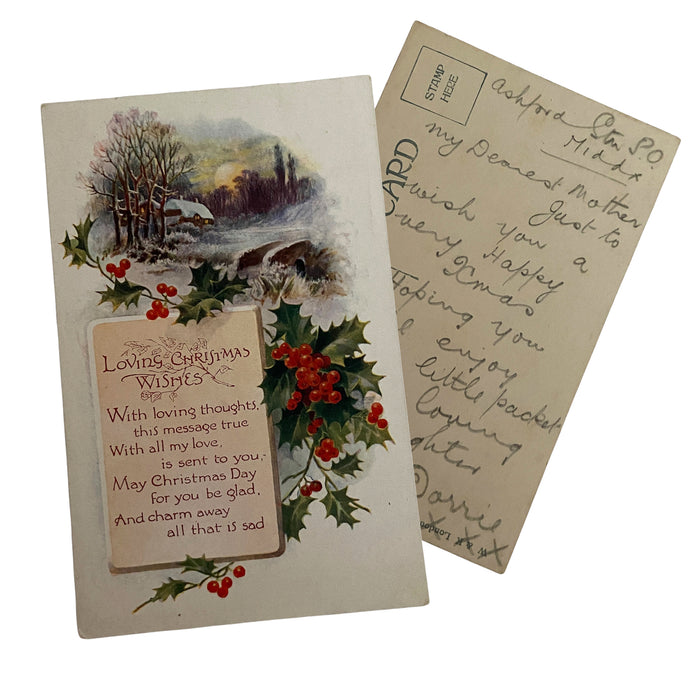
For some time now a curious trend has been emerging – a growing interest in curiosities of a distinctly morbid nature. At a time when most of us expect to live to a ripe old age – and some of us go to extraordinary lengths to prolong our lifespan beyond its natural limit – the subject of death has become something of a curiosity. As we try to come to terms with our own mortality, we’re visiting other parts of the world where mortality rates are significantly higher than ours – as in parts of Africa, where diseases like malaria and HIV are rife. We’re also revisiting our ancestors’ responses to the natural condition of death – from Victorian mourning rituals, to studies of morbid anatomy and the ancient Egyptians’ complex belief systems, rites of passage and preparation for the afterlife.
Read More
Thank you for your comment, it will be reviewd and published shortly.
30/07/2010
Death in photography
“Show me the manner in which a nation cares for its dead, and I will measure with mathematical exactness the tender mercies of its people,” said Gladstone. It was when he was Prime Minister that, on March 26th 1885, Caroline Pickersgill of Regent’s Park in London became the first person to be legally cremated in Britain. Cremation was considered the only sanitary way of dealing with the dead at a time of huge population growth in overcrowded areas - yet in 1885, only two other bodies were cremated at Britain’s first crematorium in Woking. Today, around 72% of our bodies are disposed of in this way.
There has and always will be a need to remove the bodies of the dead from amongst the living, but modern day cremations can seem like a very inhuman process, especially when compared to the elaborate mourning rituals involving coffins of the dead in, say, Victorian times. In fact, a ‘final’ image of the deceased was a
common sight in family photograph albums of the late 19th and early 20th centuries. Nowadays, in our efforts to hide images of death from public view, such records may appear unnatural or even grotesque – yet, in reality, nothing could be farther from the truth.
Read More
Thank you for your comment, it will be reviewd and published shortly.
11/06/2010
Death in fashion

In fashionable circles, there’s a curious and growing fascination with all things related to death and dying. I'll discuss the origination of this trend in a later post, but this was something I spotted some years ago.
In my 2006 book - ‘
Trends Beyond Life: In Search of Immortality’ - I wrote that the Victorians’ obsession with death would return: “Ornate headstones, ornaments and all sorts of vintage paraphernalia will appear alongside graves, in crematoria and remembrance parks.” I also said that old scents and smells that remind us of our forebears would gain renewed popularity and “Sepia photographs, domed displays of waxed flowers, ornamental urns and treasure boxes of our memories will reappear…” and, "In an age where consumer brands wield such tremendous power, we are just beginning to experience the emergence of designer funerals. This will be a major new growth area."
In a crazy moment in August 2006, I even purchased some rather
contrived sounding
domain names, including modeternal,
modimmortal, vogueternal
and modeterna, with a view to creating a funeral fashion label.
However, with neither the funds nor the backing to see this through, my
visions of black chiffoned vintage style hats teamed with gothic
inspired, jet-encrusted crepe and lace creations were never developed further.
Read More
Thank you for your comment, it will be reviewd and published shortly.